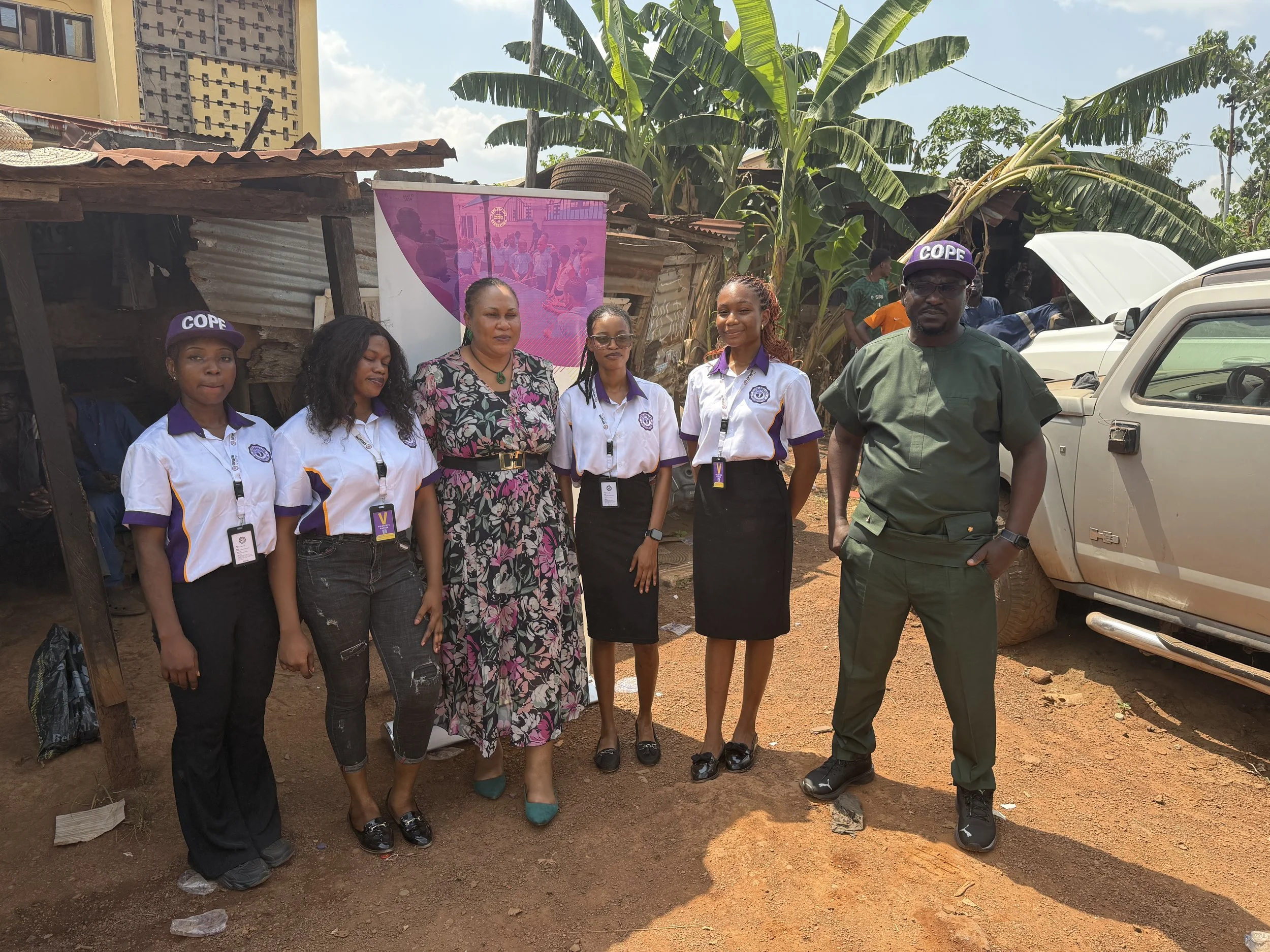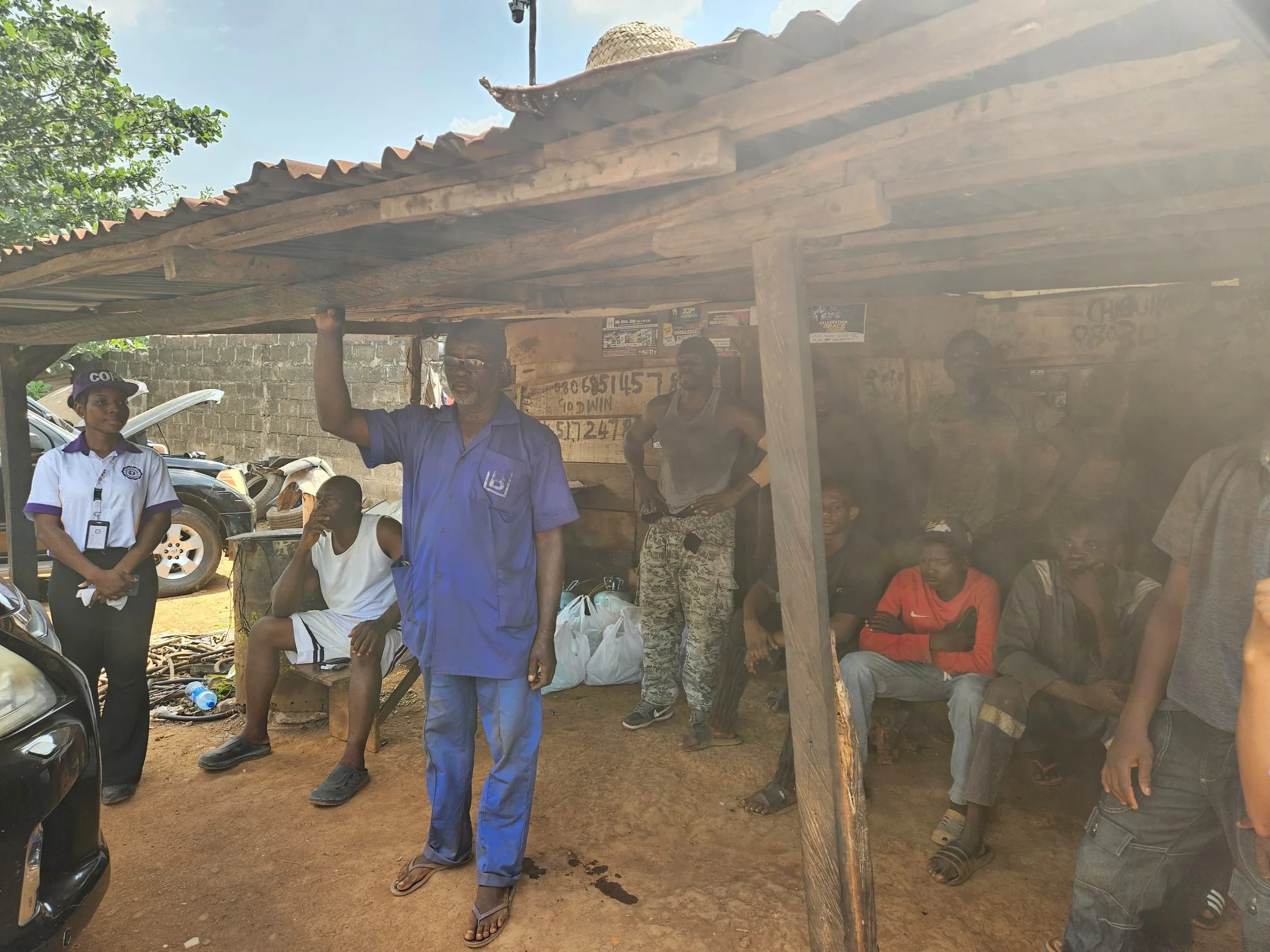
Nobody had ever come just to ask how they were.
That was the quiet sentence that kept rising from the mechanic workshop floor at Byron Onyema Close, New Haven, Enugu, on 17 November 2026 during our Men’s mental health / workplace mental health outreach. The air smelled of oil and hot metal. Engines idled. Tools clinked. It was an ordinary working day until we arrived.
Last year we gathered at Roots Restaurant for Men for Men Mental Health Week. This year, to mark Men’s Mental Health Month, the Cope and Live Mental Health Awareness Foundation chose a different place — their workplace. We went because mental health is for everyone, including the men whose hands keep the city moving and whose own loads are almost never noticed.
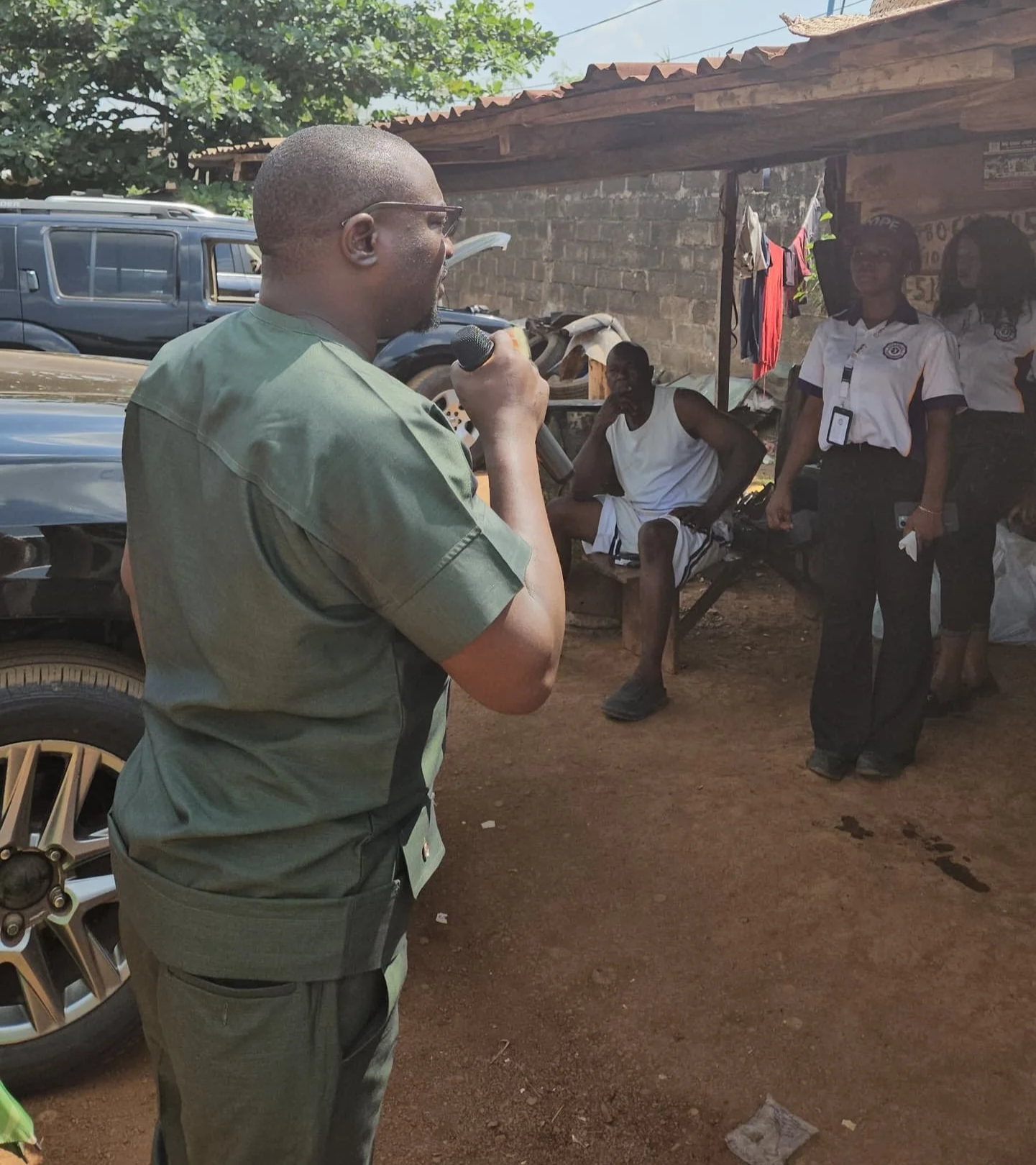
We reached over 70 people. The mechanics stayed. The men who had come only to work on their cars did not leave either. They pulled up chairs, wiped their hands, and joined the conversations. Refreshments were shared under the open sky. One man held his drink for a long moment before saying, almost to himself, that he could not remember the last time anyone had brought anything just for them.
We emphasized holistic wellbeing. We spoke about the pressure of always being the strong one, the silence men keep, and the fact that needing help is not weakness. We also talked about workplace mental health — the stress that lives between the engines and the long hours. Before we arrived it was just another day of work. By the time we left, something had shifted. Faces that had been fixed only on the job softened. Men listened. Some spoke. Others simply stayed and received the rare gift of being attended to.
The team that made the day possible included volunteer Eunice Edson, Resource Centre Manager Ifeoma Nwafor, and volunteers Chiderah Chidi and Judith Izuchukwu. Leading the effort were Founder and Executive Director Reverend Chukwudiebube Nwachukwu and Co-founder Mrs Uzoamaka Nwachukwu.
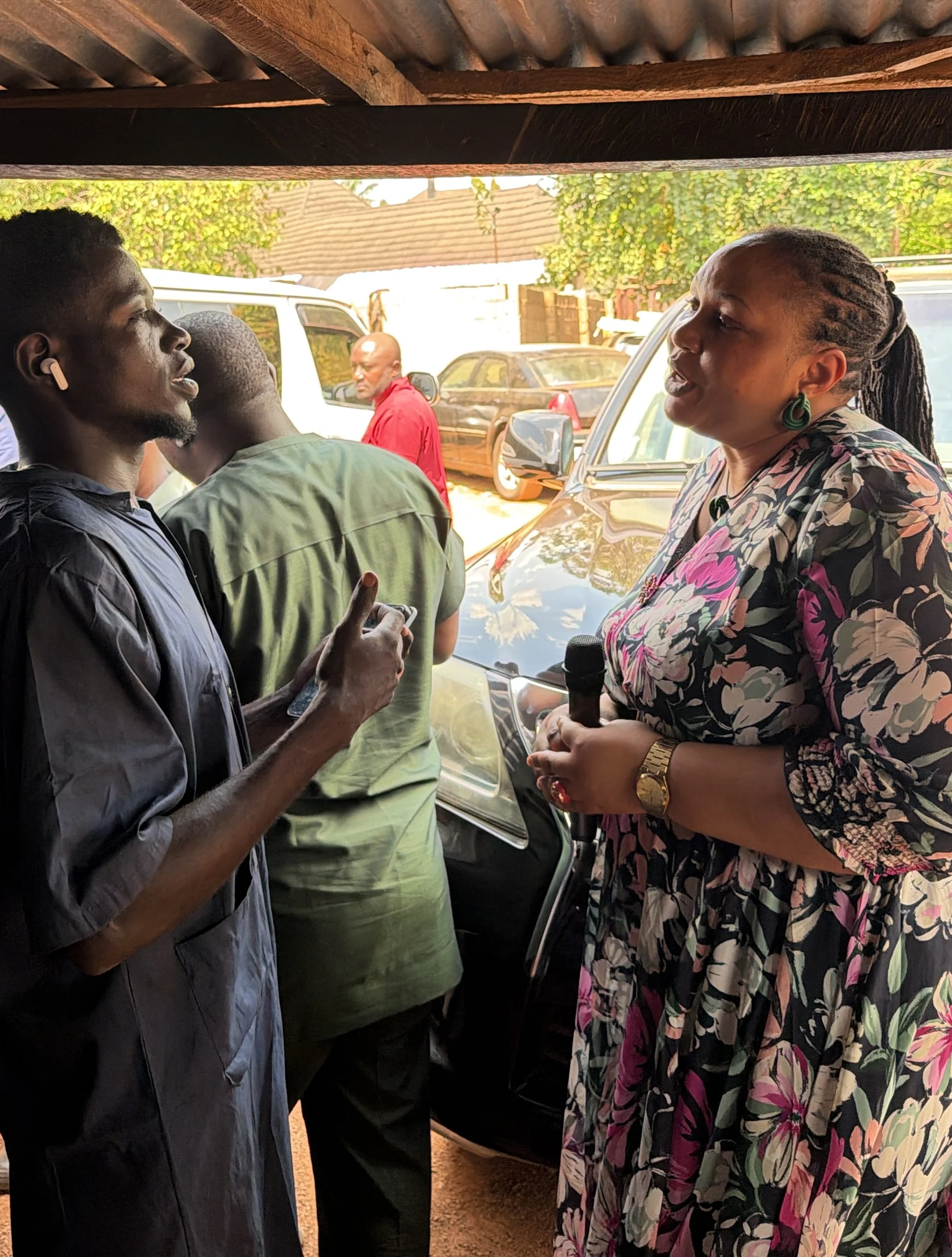
Globally, men account for roughly 77–78% of suicide deaths, and stigma keeps most from ever speaking. Yet every dollar invested in mental health support returns four to six dollars in better health and productivity (WHO and McKinsey). When a man feels seen at his workplace, the effect does not stay there. It travels home. It steadies a family. It softens a community.
We went expecting to speak. We left having been reminded that the simplest act — showing up where people actually are — can be the beginning of something larger. For a few hours on Byron Onyema Close, they were remembered. We also shared our toll free number: 080 0000 2673 and our WhatsApp number 0814 831 8965 with them for continued support.