
The lessons children learn early shape how they see themselves and treat others. Among the most valuable yet often overlooked skills is understanding personal boundaries—knowing their own limits, communicating them, and respecting those of others.
Too often, children are expected to obey without question, accept unwanted physical affection, share against their will, or stay silent when uncomfortable. Discipline and respect for authority matter, but they should not erase a child’s sense of autonomy, safety, and well-being.
Teaching boundaries does not encourage defiance. It equips children to recognize their limits, express needs appropriately, and acknowledge that others have the same rights. These skills support healthier relationships and greater confidence as they grow.
What Personal Boundaries Mean
Boundaries are the physical, emotional, and social limits that define comfort levels and how a person expects to be treated. For children, this starts with recognizing that their feelings, preferences, and rights matter.
A child can politely decline a hug. A teenager can refuse to share private information under pressure. Equally important is the reverse: children must learn that others have the same right to set and enforce their own limits. Healthy boundaries create safer, more trusting relationships rather than barriers.
Why Teach Boundaries Early
Self-awareness and self-esteem
When children can express feelings without dismissal, they develop confidence and a clearer sense of their own worth. This helps them recognise mistreatment and build relationships without constant need for approval.
Bodily autonomy and consent
Children should know their bodies belong to them. Physical contact requires respect for comfort. Key messages include: they can say no to unwanted touch; they must ask permission before touching others; boundaries apply even with family and friends; and they can tell a trusted adult when something feels wrong. These lessons should be age-appropriate and ongoing, not limited to “stranger danger.”
Protection from harm
Understanding boundaries helps children recognise coercion, unsafe secrets, or uncomfortable situations—even with people they know. They should feel able to report concerns. However, the primary responsibility for safeguarding always rests with adults, not children.
Emotional intelligence
Boundary skills help children name discomfort or exhaustion without shame and consider how their actions affect others. Empathy grows when they learn that repeated disregard for someone’s space or feelings has real impact.
Healthier relationships
Children who grasp boundaries are better equipped to handle peer pressure and avoid controlling or one-sided friendships. Healthy relationships involve mutual respect, not constant sacrifice of personal comfort or values.
Digital safety
The same principles apply online: protect personal information, obtain permission before sharing others’ photos or messages, refuse pressure to share private content, report harassment, and respect others’ digital privacy.

Without these lessons, some children become people-pleasers who struggle to say no. Others fail to respect space, accept rejection, or notice when their behaviour makes someone uncomfortable. These patterns often intensify in adolescence amid peer pressure and emerging romantic interests, affecting friendships, family ties, and later relationships. Early education reduces these risks.
Teaching Children to Respect Others’ Boundaries
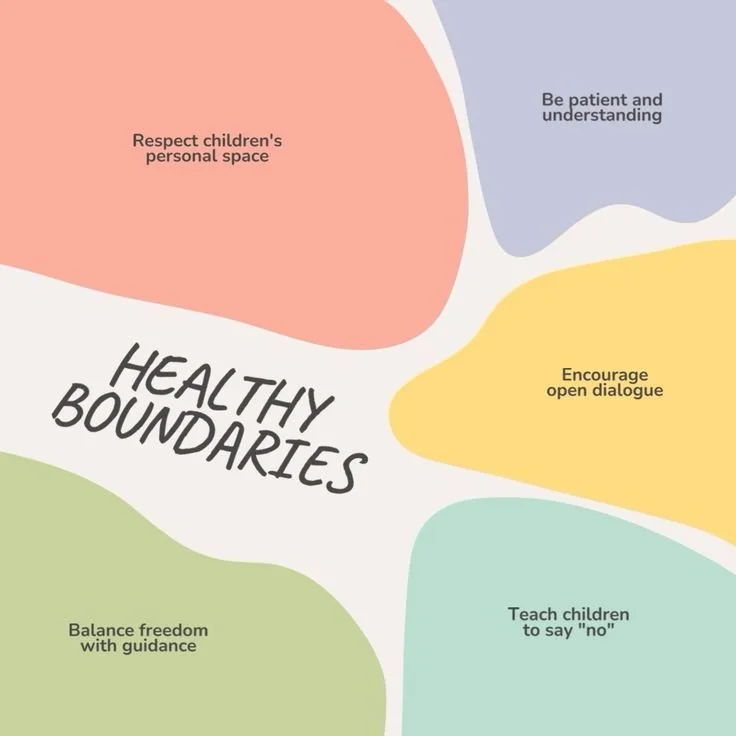
Setting personal limits must go hand in hand with honouring other people’s choices. Examples include accepting a friend’s refusal to play, giving space when asked, not pressuring someone to share belongings, and respecting a declined hug. “No” does not require justification or debate. Respecting a decision different from one’s preference is fundamental.
Children absorb what they see. In some families and cultures, questioning adults or declining affection is labelled disrespectful. Cultural values and respect for elders remain important, yet they need not override a child’s bodily autonomy or safety. Parents can encourage alternative greetings (a wave or handshake) instead of forcing hugs, showing that affection should be genuine. Children learn as much from adult behaviour as from adult words.
Practical Ways to Teach Boundaries
- Use simple language with your children: “I don’t feel comfortable,” “Please stop,” “I need space,” “May I use this?”, “Are you okay with a hug?”
- Model healthy boundaries with your children and own up when you cross them.
- Never force physical affection; let your children choose how they greet people.
- Create space for open talk so your children feel safe raising concerns without fear of blame or ridicule.
- Use ordinary moments—toys, disagreements, online activity—as teaching opportunities.
- Stress that personal limits never justify insulting or disregarding others. Balance self-respect with consideration.
Boundaries in Adolescence
Teen years bring more complex relationships, peer pressure, privacy needs, and questions of romantic and sexual consent. Young people should understand they can decline unwanted advances, need not abandon their values for acceptance, must respect others’ consent, and that healthy friendships do not demand constant emotional sacrifice. Conversations work best when open and non-judgemental rather than lecturing or dismissive.
Boundaries and Mental Health
Recognizing emotions, communicating needs, and setting limits supports self-esteem and reduces unnecessary emotional pressure. Respecting others’ boundaries contributes to more empathetic environments. Boundaries do not prevent all mental health challenges, but the ability to identify discomfort and seek help strengthens overall well-being.
Teaching boundaries is an ongoing process, not a single talk. Parents, teachers, stakeholders and communities can raise children who know they have the right to feel safe, express discomfort, and protect their space—while equally recognising those rights in others. The goal is not merely teaching children to say “no,” but helping them communicate limits respectfully and accept others’ limits without resentment. These skills form a foundation for safer relationships, stronger self-awareness, and a more respectful society.
Eunice Edson is a volunteer team member at CALMHAF and just completed her National Service (NYSC).