Beyond the Cut: Addressing FGM’s Deep Psychological Harm in Imo State
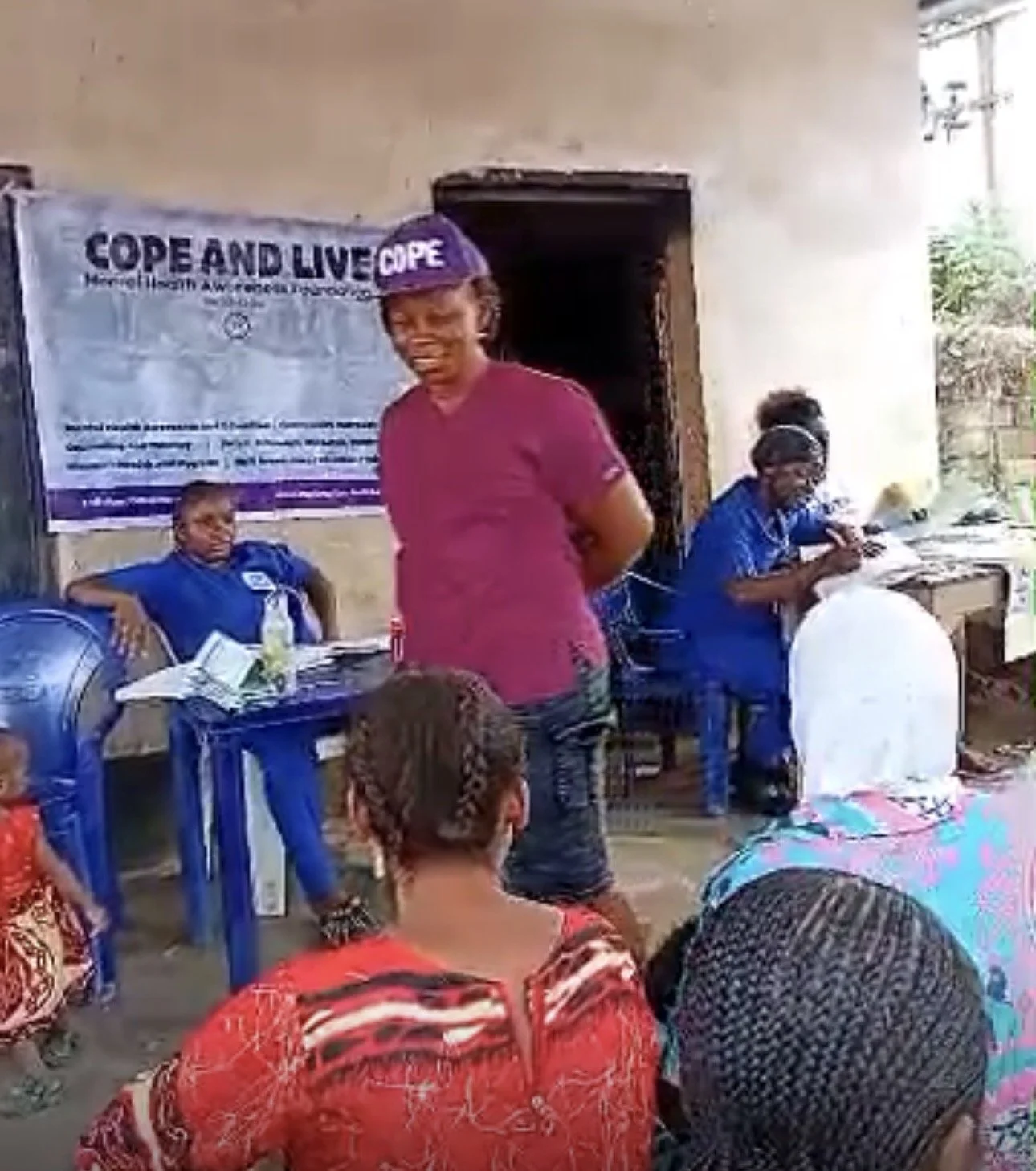
The Cope and Live Mental Health Awareness Foundation successfully conducted two targeted community outreach programs under the theme “Beyond the Cut: Addressing FGM’s Deep Psychological Harm in Imo State”. The sessions took place at the Umuokwe Health Centre in Oru East Local Government Area, Imo State, on 5th and 19th March 2026.
Expertly facilitated by Nurse Chinwendu Obileme, Imo State Programs Manager for the Foundation, these outreaches sought to educate community members about Female Genital Mutilation (FGM)—a harmful traditional practice involving the partial or total removal of the external female genitalia or other injury to the female genital organs for non-medical reasons—and to illuminate its severe and often overlooked psychological consequences. This outreach was carried out under Our MOTHER TO MOTHER INITIATIVE (MTMI), a community-driven program that empowers nursing and new mothers across Nigeria by fostering peer connections, sharing lived experiences, and offering expert-led education. MTMI builds resilience, promotes self-care, and strengthens overall well-being while advocating for the full integration of maternal mental health into Africa’s Early Childhood Development agendas.
Participants were provided with clear, evidence-based information on the World Health Organization (WHO)-classified types of FGM:
• Type 1 (Clitoridectomy): Partial or total removal of the clitoral glans and/or the prepuce (clitoral hood).
• Type 2 (Excision): Partial or total removal of the clitoral glans and the labia minora, with or without excision of the labia majora.
• Type 3 (Infibulation): Narrowing of the vaginal opening through the creation of a covering seal by cutting and repositioning the labia minora and/or labia majora, often with removal of the clitoris.
• Type 4: All other harmful procedures to the female genitalia for non-medical purposes, including pricking, piercing, incising, scraping, or cauterization.
FGM remains illegal and unlawful in Nigeria under the Violence Against Persons (Prohibition) Act of 2015, which criminalizes the practice with penalties of imprisonment and fines. Despite this clear legal prohibition, the custom persists in many communities due to deeply entrenched cultural beliefs, creating a critical enforcement gap that strongly motivated the Cope and Live Foundation to undertake these focused awareness and support interventions in Imo State.
The sessions examined key cultural beliefs that perpetuate FGM across Africa and Nigeria, including:
• The desire to limit female promiscuity and control women’s sexuality.
• Ensuring premarital virginity, marital fidelity, and perceived “purity.”
• Enhancing a girl’s marriageability and social acceptance within the community.
• Viewing FGM as a traditional rite of passage into womanhood.
• Beliefs associating the practice with hygiene, cleanliness, family honor, prevention of barrenness, or religious/cultural tradition passed down through generations.
The procedure is typically performed in secrecy on young girls, most commonly between infancy and 15 years of age, with the vast majority of cases in Nigeria occurring before the age of 5 (approximately 86%, per UNICEF data). It is frequently carried out by older female family members or traditional practitioners using crude, unsterilized implements such as razor blades, knives, or broken glass, often without anesthesia or basic hygiene. These conditions dramatically increase the risk of life-threatening complications, including severe hemorrhage, infections (tetanus, sepsis, urinary tract infections), chronic pain, fistulae, and long-term physical disability.
The psychological toll is equally devastating. Because the procedure is often inflicted on unwilling young girls by trusted older family members, survivors commonly experience profound feelings of betrayal, mistrust, fear, shame, violation, and emotional distress. These experiences contribute to elevated rates of anxiety disorders, depression, post-traumatic stress disorder (PTSD), low self-esteem, sleep disturbances, somatization, phobias, flashbacks, avoidance behaviors, and significant difficulties in forming trusting relationships, sexual intimacy, and marital life.
The outreaches were characterized by lively, participatory discussions. Community members actively engaged through questions, personal reflections, and open dialogue, which helped challenge long-held misconceptions, foster collective awareness, and build momentum for change.
To ensure ongoing support, survivors and at-risk individuals were offered free professional counseling through the Foundation’s dedicated toll-free helpline - 0800000COPE (08000002673) and inclusion in a peer support group for.
These initiatives were inspired and informed by authoritative global and national data from the World Health Organization (WHO) and UNICEF, which report that more than 230 million girls and women worldwide have undergone FGM, with Africa bearing the heaviest burden (over 144 million cases). In Nigeria, prevalence among women aged 15–49 remains significant (approximately 15–20%), with concerning trends of rising incidence among girls aged 0–14 in certain regions, including parts of the South East such as Imo State.
Through education, dialogue, and accessible mental health support, these outreaches advance the Cope and Live Mental Health Awareness Foundation’s mission to break the cycle of silence surrounding harmful practices, empower communities, provide trauma-informed care to survivors, and contribute meaningfully to the elimination of FGM in Imo State and beyond.
If things are getting out of hand, please call us on +234 814 831 8965 or send us an Email at: info@copeandlive.foundation for tailored guidance.