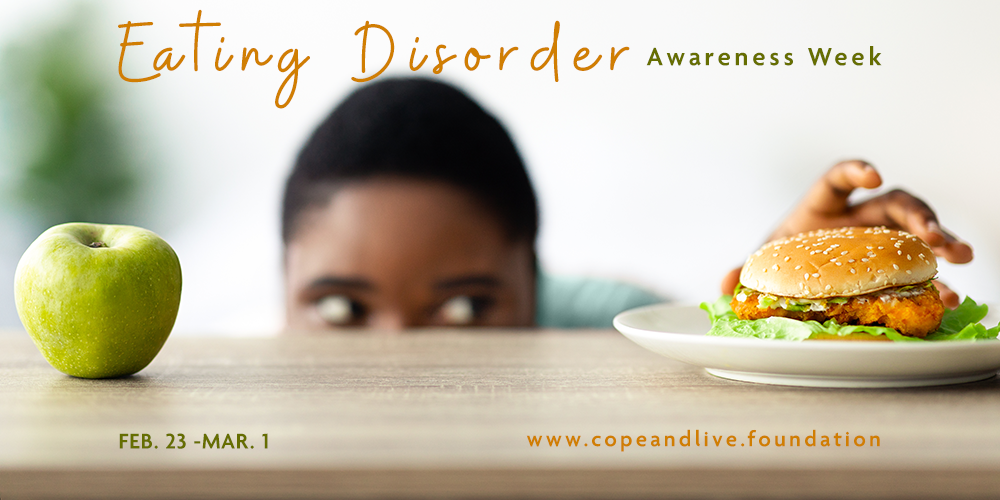
Eating disorders are deeply rooted mental health conditions that affect how a person thinks, feels, and sees themselves. They are not just about food. Behind restrictive eating, bingeing, or purging behaviors, there is often emotional pain, anxiety, trauma, or a desperate need for control.
As conversations grow during initiatives like Eating Disorders Awareness Week, it becomes clearer that eating disorders must be discussed within the broader context of mental health.
Eating Disorders Are Serious Mental Illnesses – Not Choices
Eating disorders are classified as psychiatric conditions. This means they are illnesses of the mind that show up physically in the body.
They affect:
Thoughts (e.g., “I am not good enough unless I lose weight.”)
Emotions (shame, fear, anxiety)
Behaviors (restricting food, binge eating, purging)
They are not lifestyle choices. They are coping mechanisms for deeper psychological struggles.
Eating disorders rarely exist alone. Many people struggling with them also experience other mental health conditions like:
Depression: Feelings of hopelessness, low energy, and loss of interest in life can fuel disordered eating behaviors.
Anxiety Disorders: Constant worry about weight, food, or appearance often overlaps with generalized anxiety or social anxiety.
Obsessive-Compulsive Traits: Rigid food rules, calorie counting, and ritualistic eating patterns can resemble obsessive-compulsive behaviors.
Trauma and PTSD: For some individuals, controlling food becomes a way to regain power after trauma.
In many cases, the eating disorder becomes a way to manage overwhelming emotions.[^1][^2][^3]
The Emotional Roots: Why Food Becomes a Coping Tool
Food can become a coping tool when someone doesn’t know how to process emotions in a healthy way. Stress may lead to binge eating.
Low self-esteem may lead to extreme dieting.
Feeling out of control in life may lead to rigid food control.
Loneliness may lead to emotional eating.
Sadly, instead of addressing the emotional wound, the focus shifts to the body.
When Self-Worth Hinges on the Mirror: Body Image Traps
Mental health and body image are closely connected. When self-worth is tied to appearance, every small body change can feel like a crisis.
Negative self-talk such as: “I’m ugly.”, “I don’t deserve to eat.”, “People will only love me if I’m slim.”
These thoughts are cognitive distortions—patterns of thinking often seen in anxiety and depressive disorders. Healing requires addressing these internal narratives, not just eating habits.
The Vicious Cycle: How the Brain and Body Feed Each Other
Mental health affects physical health, and vice versa.
When someone restricts food severely:
The brain receives less fuel.
Mood becomes unstable.
Concentration decreases.
Anxiety and depression worsen.
Malnutrition can intensify mental health symptoms, creating a dangerous cycle: Mental distress → Disordered eating → Physical depletion → Worse mental distress.[^4]
Why Treating the Mind First Unlocks True Healing
Treating eating disorders requires more than meal plans. It requires psychological care.
Effective treatment often includes:
Cognitive Behavioral Therapy (CBT)
Trauma-informed therapy
Family therapy (especially for adolescents)
Medication for co-occurring depression or anxiety
Nutritional rehabilitation
When mental health is addressed, eating patterns gradually improve.[^5][^6]
Shattering the Silence: Ending Stigma One Conversation at a Time
In many communities, mental health struggles are misunderstood or dismissed. People may hear:
“Just eat normally.” “It’s not that serious.” “You’re just being dramatic.”
But eating disorders are serious mental health illnesses. Compassion, education, and open conversations are essential to get to the root causes.
Mental health awareness helps reduce stigma and encourages people to seek help earlier.
Recovery Is Real: There’s Hope and Strength in Healing
Recovery from an eating disorder is possible by getting to the root causes. It means healing both the mind and the body. It means learning: Healthy coping strategies, Emotional regulation skills, Self-compassion, Balanced thinking patterns.
You are not weak for struggling. You are human. And healing is possible.
If you or someone you know is struggling, reaching out to a mental health professional can be life-changing. Taking that first step is not a sign of failure—it is a sign of strength. Reach out to us today.
Sources
[^1]: National Eating Disorders Association (NEDA). (n.d.). Eating Disorders and Anxiety Disorders. https://www.nationaleatingdisorders.org/eating-disorders-and-anxiety-disorder
[^2]: National Institute of Mental Health (NIMH). (n.d.). Eating Disorders. https://www.nimh.nih.gov/health/statistics/eating-disorders
[^3]: Hambleton, A., et al. (2022). Psychiatric and medical comorbidities of eating disorders: findings from a rapid review of the literature. Journal of Eating Disorders. https://link.springer.com/article/10.1186/s40337-022-00654-2
[^4]: NIMH. (n.d.). Eating Disorders. (Overview of brain-body impacts and cycles).
[^5]: American Psychiatric Association. (2023). Practice Guideline for the Treatment of Patients with Eating Disorders (supports CBT, family therapy, etc.).
[^6]: NEDA & related guidelines (e.g., family-based treatment for adolescents as evidence-based).
The Writer:
I am Mrs Uzoamaka Nwachukwu, Co-Founder of Cope and Live Mental Health Awareness Foundation (www.copeandlive.foundation) and COLI Academy (www.coliacademy.org).
As a trained Child Psychologist, Microbiologist, Grief & Bereavement Counsellor, Depression Counsellor, Emotional Intelligence Life Coach, EMDR and CBT Practitioner, and certified Mental Health First Aider, I bring deep professional expertise and genuine compassion to every life I touch.
Through counselling & therapy, community outreach, women’s health & hygiene programmes, skill acquisition & vocational training, policy advocacy, research, and innovation, my team and I are building a mentally healthier Nigeria – one conversation, one life, one community at a time.
My greatest love has always been for children, and my passion for mental health drives me to remain a leading voice in advocacy, breaking stigma, healing minds, and helping people not just cope – but truly live.
If things are getting out of hand, please call us on +234 814 831 8965 or send us an Email at: info@copeandlive.foundation for tailored guidance.