Braille and Mental Health: Touching the World Through Six Dots
Every year on January 4—the birthday of Louis Braille—the world celebrates a silent revolution: the invention of Braille. Blinded at age three, Braille developed his system in 1824 as a student in Paris, transforming six raised dots into a universal tactile language.
Observed since 2019 by the United Nations, World Braille Day raises awareness of Braille’s vital role in realizing the human rights of blind and partially sighted people, including education, freedom of expression, and social inclusion (as outlined in the Convention on the Rights of Persons with Disabilities).
What is Braille?
Braille is a tactile code using six dots to represent letters, numbers, and even musical, mathematical, and scientific symbols. It enables blind and partially sighted individuals to read and write independently, accessing the same content as printed text.
The World Health Organization defines blindness as visual acuity worse than 20/400 (with correction) or a visual field of 10 degrees or less. Importantly, many causes—such as cataracts and refractive errors—are reversible, and thorough eye examinations are essential before diagnosing irreversible blindness.
Blindness and Braille in Nigeria
Nigeria has approximately 1.1 million blind adults (aged 40+), with 2.7 million moderately and 400,000 severely visually impaired—totaling 4.25 million. Cataracts cause 43% of blindness, glaucoma 0.7%, and 84% of cases are avoidable. Uncorrected refractive errors account for 57.1% of moderate impairment.
Nigeria ranks among Africa’s leaders in Braille access (alongside Ethiopia and Egypt), with organizations like the Braille Advancement Association of Nigeria promoting literacy. However, the absence of a national Braille press and limited urban library services remain major barriers in Africa’s most populous nation.
Bridging the Digital Divide
While screen readers and audio tools have expanded access for the world’s 2.2 billion people with vision impairment, they cannot replace Braille’s core literacy benefits. The COVID-19 pandemic highlighted the dangers of digital exclusion when vital information was inaccessible.
Many websites and apps still lack proper accessibility. Refreshable Braille displays are powerful but prohibitively expensive. The UN and World Blind Union stress that accessibility must be built into technology from the start—not added later.
The Irreplaceable Value of Braille in Education
Braille instruction has declined in many systems, often overshadowed by audio alternatives. Yet audio cannot teach spelling, punctuation, or text structure. Early Braille literacy provides blind children the same independent reading and writing skills as sighted peers, fostering self-expression, creativity, and full societal participation.
Braille and Mental Health: Empowering Independence and Well-Being
Vision impairment significantly increases the risk of mental health challenges. Globally and in regions like Nigeria, blind and partially sighted individuals experience higher rates of depression, anxiety, social isolation, and reduced quality of life compared to sighted peers. Factors include loss of independence, dependency on others, stigma, and barriers to daily activities.
Braille literacy directly counters these risks by promoting autonomy and self-reliance—key protective factors against depression and anxiety. Studies show that proficient Braille users report higher self-esteem, confidence, life satisfaction, and emotional well-being. The ability to read and write independently reduces reliance on others for information, enabling private engagement with texts, personal correspondence, and labeling everyday items.
This fosters a positive self-identity, intellectual equality, and reduced feelings of helplessness. Braille users are also more likely to achieve higher education and employment, further buffering against isolation and low mood. In contrast, limited Braille access exacerbates dependency and vulnerability to mental health issues.
A Human Right, Not a Privilege
The UN Convention on the Rights of Persons with Disabilities (ratified by over 180 countries) affirms access to information in accessible formats as a fundamental right. Without Braille on documents, labels, signage, or ballots, blind citizens are excluded from civic life. Accessibility is about equality, not charity.
The Way Forward: Urgent Action Needed in Nigeria
As we mark World Braille Day 2026, Nigeria stands at a critical juncture. With 4.25 million visually impaired citizens and 84% of blindness cases avoidable, bold, decisive action is essential to turn promises into reality and deliver dignity, independence, and mental well-being to millions.
How The Government can lead with courage and commitment:
Immediately establish and fund a fully operational National Braille Press to produce affordable, high-quality Braille materials in English, major Nigerian languages, and educational texts.
Enforce strict accessibility standards across all public services: mandate Braille on medication packaging, ballot papers, public signage, ATMs, and government websites.
Integrate comprehensive Braille instruction into the national curriculum, train specialist teachers, and equip all schools serving blind students with necessary resources.
Fully implement the Discrimination Against Persons with Disabilities (Prohibition) Act by allocating dedicated budgets for Braille production, assistive technology subsidies, and inclusive education programs.
Ratify and operationalize the Marrakesh Treaty without further delay to enable cross-border exchange of Braille books and expand literary access.
How Private Healthcare providers can step up as partners in progress:
Make Braille the standard, not the exception: provide patient information leaflets, consent forms, prescriptions, and medication labels in Braille as routine practice.
Invest in staff training to ensure seamless communication with visually impaired patients and offer on-site Braille transcription services.
Partner with NGOs and government to subsidize refreshable Braille displays and screen readers for low-income patients.
Lead by example in preventing avoidable blindness through widespread screening programs for cataracts and refractive errors, ensuring no child or adult is unnecessarily consigned to a life of dependency.
These actions are not optional—they are moral and legal imperatives. Every day without them deepens exclusion, erodes self-esteem, and heightens mental health risks for millions of Nigerians.
Braille’s enduring power lies in its simplicity: easy to produce, learn, and adapt—yet capable of expressing any language or notation. It places literacy directly in the hands of those who cannot see.
Our Duty
We call on everyone to:
Advocate for inclusive education with strong Braille programs.
Demand accessible public information, including websites and signage.
Support full implementation of the Marrakesh Treaty for cross-border sharing of Braille materials.
Promote affordable assistive technologies like refreshable displays.
Support NGOs and Foundations: Individuals, families, community groups, and corporate bodies can donate funds, volunteer time, or partner with reputable NGOs and foundations working with visually impaired persons to expand Braille literacy programs, provide assistive devices, and offer mental health support services.
Raise awareness using #WorldBrailleDay and #MoreBrailleMoreEmpowerment.
Learn about Braille, volunteer, or read about Louis Braille’s legacy.
Happy World Braille Day 2026!
If you found this article inspiring, please share your thoughts in the comments section below.
To submit an article for publication, please email your contribution to info@copeandlive.foundation. Submissions may be edited prior to publishing. Include your full name as you wish it to appear and any relevant qualifications or citations.
About the Writer:
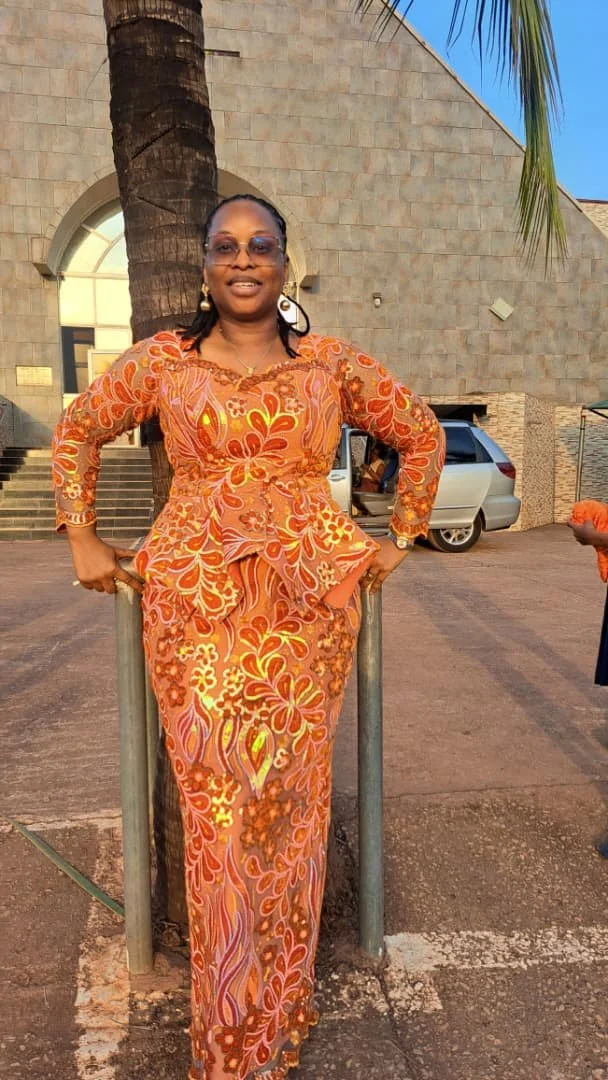
Dr. Mrs. Nkoli Madichie is a dedicated mother of three adult children and a highly experienced optometrist with over 15 years of clinical practice.
As a licensed senior optometrist, she works at two private eye hospitals, delivering exceptional eye care to her patients. She also serves as a volunteer optometrist with Peacemakers International in Chicago, Illinois, contributing her expertise to humanitarian efforts.
A passionate educator at heart, Dr. Madichie currently volunteers as a part-time teacher at a mission school. As an entrepreneur and lifelong learner, she is actively pursuing postgraduate degrees in Public Health and Education to further broaden her impact in healthcare and community development.
If things are getting out of hand, please call us on +234 814 831 8965 or send us an Email at: info@copeandlive.foundation for tailored guidance.