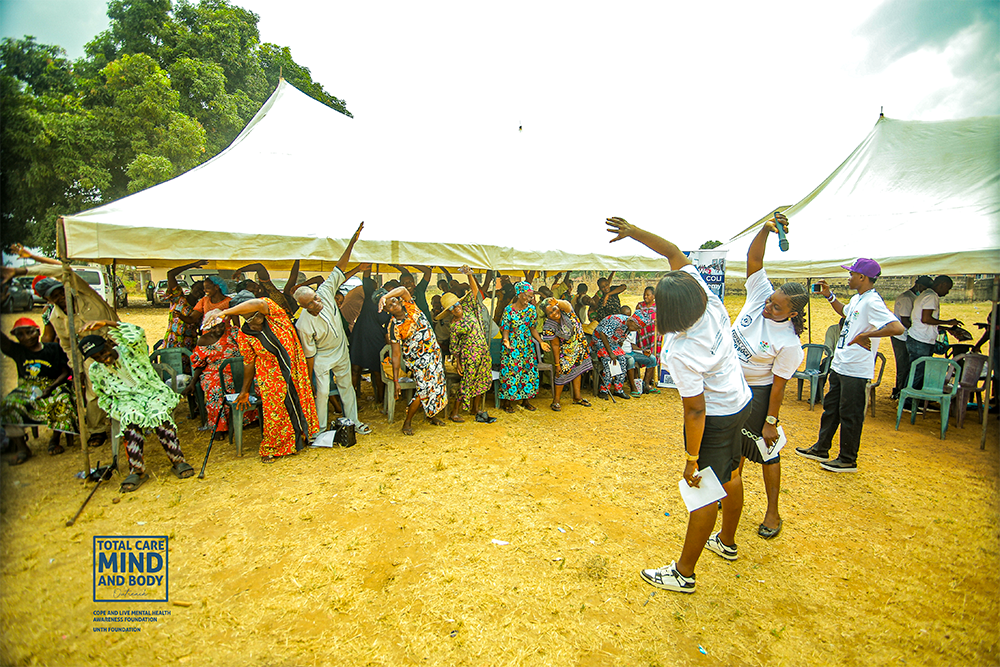
The Cope and Live Mental Health Awareness Foundation, in close partnership with the UNTH Foundation, delivered a powerful Total Care Mind and Body Outreach on January 24, 2026, at the Community Primary School Field in Ameke Ozalla, Enugu State. Over 100 seniors and retirees (aged 60+) from this underserved rural community received free, integrated, holistic services in one compassionate, accessible space.
At the core of the program was physiotherapy-inspired wellness exercises and guided movement—deliberately emphasized to harness the profound mind-body connection and support mental resilience alongside physical vitality in later years. These sessions were woven seamlessly with other essential interventions:
- Free dental screenings and examinations (often the first professional oral care in years)
- TB screening (combined with HIV/Syphilis testing) for early detection
- General medical checks
- Counseling and mental health discussions on isolation, loneliness, dementia awareness, coping strategies, and motivation barriers
- Practical education on oral hygiene, healthy habits, and follow-up referrals (~70% of participants linked to ongoing care)
This one-stop approach directly tackled bidirectional links: physical inactivity and pain fueling depression/anxiety; poor oral health driving chronic pain, malnutrition, and social withdrawal; TB/comorbidities amplifying distress and reducing adherence; and mental health challenges accelerating physical decline.
Emphasis on Physiotherapy: A Cornerstone for Mind-Body Healing in Seniors
Physiotherapy (physical therapy) and mental health are inseparably linked—improving one powerfully boosts the other through a holistic, mind-body approach. Our wellness exercises showcased this in action, delivering tailored, gentle, guided movement suited to seniors' needs and abilities.
Key Benefits (Concise Summary – Tailored to Our Outreach for Older Adults)
- Reduces symptoms of depression, anxiety, and stress — Regular, guided exercise releases endorphins, lowers cortisol, improves sleep quality, and enhances mood. Evidence shows these effects can be comparable to therapy or medications for mild-to-moderate cases. The World Health Organization states: "Regular physical activity... reduces symptoms of depression and anxiety, enhances brain health, and can improve overall well-being" (WHO Fact Sheet on Physical Activity, updated 2024). For older adults, it also supports cognitive health and reduces risks of dementia and falls.
- Breaks the chronic pain cycle — Common age-related pain (e.g., from arthritis, prior injuries, or poor posture) worsens frustration, helplessness, and low mood. Techniques demonstrated included gentle stretching, manual therapy-inspired mobilizations, and pain management education—restoring function, mobility, balance, and self-esteem while easing the physical burden that deepens emotional distress.
- Promotes physical activity and sustainable lifestyle changes — Tailored, progressive programs build motivation, consistency, and independence—crucial when mental health challenges (like low energy, isolation, or depression) lead to inactivity. Participants gained practical tools to continue safe movement at home, fostering long-term habits for vitality.
- Incorporates mind-body techniques — Breathing exercises, progressive relaxation, mindfulness practices, body awareness, and gentle yoga-inspired movements were integrated to reduce muscle tension (common in stress/anxiety), improve emotional regulation, and strengthen the mind-body connection—helping seniors feel more centered and resilient.
- Supports severe or chronic mental health conditions — As an adjunct (e.g., alongside depression, anxiety, or in those with comorbidities), physiotherapy improves physical fitness, reduces metabolic and cardiovascular risks, counters medication side effects, and enhances quality of life—addressing documented shorter life expectancy linked to poor physical health in mental illness populations.
High-quality evidence backs this: A 2023 umbrella review in the British Journal of Sports Medicine concluded that "physical activity is highly beneficial for improving symptoms of depression, anxiety and psychological distress across a very wide range of adult populations," with multimodal and moderate-vigorous approaches showing strong effects—perfectly aligned with our senior-focused model.
Transformative Outcomes We Witnessed
Participants experienced real relief: reduced pain and better mobility from movement sessions; renewed smiles and confidence from dental care; early peace of mind from TB/medical screenings; and emotional uplift from discussions and community connection. Many left walking taller, smiling more freely, and motivated to sustain healthier habits—countering isolation through shared activity and support from local leaders.
Why This Matters – Aligned with Global & Local Needs
In underserved rural communities, where seniors face compounded burdens (physical frailty, economic strain, social disconnection, limited access to integrated care), this outreach reduced inequities and prevented downstream issues. It embodies WHO calls for people-centered, integrated care—linking physical activity to mental health promotion (WHO Guidelines on Physical Activity and Sedentary Behaviour), TB-mental health integration (WHO Operational Handbook on Tuberculosis, Module 6), and healthy aging strategies that prioritize movement, social connection, and holistic support.
We are proud to lead this life-affirming work, proving that embedding physiotherapy-led movement within broader interventions (dental, TB screening, mental health support) empowers dignity, resilience, and healthy aging.
If your community could benefit from duplicating this model—featuring emphasized physiotherapy/wellness exercises alongside dental, TB/mental health screening, and more—reach out! We're committed to scaling for more Nigerians.
For support or info, call our toll-free line: 0800000COPE (08000002673). Stay tuned for the next event!
-Dr Chinelo Igbelina
Enugu State Programs Manager, CALMHAF
If things are getting out of hand, please call us on +234 814 831 8965 or send us an Email at: info@copeandlive.foundation for tailored guidance.