Seeing Them vs. Seeing You: The Empathy-Projection Trap
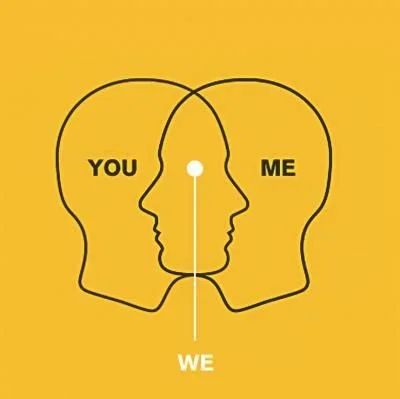
We all naturally use our own experiences as a starting point to relate to others—after all, we can only imagine feelings based on what we've known. This can create overlap: some degree of "what would I feel?" is involved in empathy. However, genuine empathy goes further by suspending our assumptions, actively listening, and adjusting based on the other person's feedback. Projection stops at the assumption stage.
In psychology and everyday interactions, empathy and projection are often confused, yet they represent fundamentally different ways of relating to others' emotions and experiences. While both involve attempting to understand another person, one fosters genuine connection, while the other can lead to misunderstanding or distortion.
Empathy
Empathy is the ability to understand and share the feelings of another person from their perspective. It involves imaginatively stepping into someone else's shoes—accurately perceiving their emotional state, thoughts, and experiences—without losing the boundary between self and other. True empathy requires conscious effort, curiosity, and often verification, such as asking clarifying questions. It focuses entirely on the other person and promotes compassion, support, and stronger relationships.
Projection
Psychological projection is a defense mechanism where we unconsciously attribute our own thoughts, feelings, impulses, or traits to someone else. This often occurs when we deny or repress uncomfortable aspects of ourselves and "project" them outward. Projection is typically automatic and self-centered: it reveals more about us than about the other person. A desire to be heard rather than to really help. The Book of Proverbs reminds us that, ‘’the fool has no delight in understanding but only in expressing his own opinion’’. In milder forms, it's a cognitive bias where we assume others think or feel the way we do. Many psychologists view projection as the opposite of empathy because it imposes our inner world onto others rather than tuning into theirs accurately.
Differences
Focus: Empathy centers on the other person's unique experience; projection centers on our own internal experience.
Awareness: Empathy is conscious and intentional; projection is often unconscious and automatic.
Accuracy: Empathy strives for an objective understanding of the other; projection assumes others mirror our own feelings or thoughts.
Outcome: Empathy builds connection and reduces misunderstanding; projection can create misunderstanding or conflict.
Motive: Empathy stems from curiosity and emotional attunement; projection serves as a defense against personal discomfort or self-denial.
Real-Life Examples
Empathy in action: Someone shares they're grieving a loss. You listen, notice their sadness, and respond, "I'm here for you—what's been the hardest part?" This validates their unique experience.
Projection in action: The same scenario, but you assume they're feeling guilty (because you've felt guilt in past losses) and say, "You must feel so guilty about what happened." If that's not their reality, they feel misunderstood.
How to Cultivate Empathy and Reduce Projection
Build self-awareness: Pause and ask yourself, "Is this observation about them, or am I inserting my own story?"
Verify your understanding: Use open phrases like "It seems like you're feeling X—does that fit?" or "Tell me more about what's going on for you."
Listen fully without interrupting or rushing to advice.
Reflect on your own triggers: Unresolved emotions are often the root of projection.
In relationships, work, therapy, or daily life, recognizing the difference between empathy and projection can transform how we connect with others. Empathy bridges gaps and deepens understanding; unchecked projection builds walls and creates distance. Mastering this distinction leads to more authentic, supportive, and meaningful relationships.
If you found this article inspiring, please share your thoughts in the comments section below.
To submit an article for publication, please email your contribution to info@copeandlive.foundation. Submissions may be edited prior to publishing. Include your full name as you wish it to appear and any relevant qualifications or citations.
About the Writer:
I am Mrs Uzoamaka Nwachukwu, Co-Founder of Cope and Live Mental Health Awareness Foundation (www.copeandlive.foundation) and COLI Academy (www.coliacademy.org).
As a trained Child Psychologist, Microbiologist, Grief & Bereavement Counsellor, Depression Counsellor, Emotional Intelligence Life Coach, EMDR and CBT Practitioner, and certified Mental Health First Aider, I bring deep professional expertise and genuine compassion to every life I touch.
Through counselling & therapy, community outreach, women’s health & hygiene programmes, skill acquisition & vocational training, policy advocacy, research, and innovation, my team and I are building a mentally healthier Nigeria – one conversation, one life, one community at a time.
My greatest love has always been for children, and my passion for mental health drives me to remain a leading voice in advocacy, breaking stigma, healing minds, and helping people not just cope – but truly live.
If things are getting out of hand, please call us on +234 814 831 8965 or send us an Email at: info@copeandlive.foundation for tailored guidance.